Cylburn Arboretum Friends

  • About Us
    • Who We Are
    • Staff
    • Board
    • Our History
    • Financial Statements
    • Cylburn Master Plan
  • Members
  • Rentals & Permits
  • Contact Us
  • Visit
    • Buildings and Facilities
    • Know Before You Go
    • Explore Cylburn Arboretum
    • Cylburn Arboretum Tour Information
  • Programs & Events
    • Upcoming Events
    • Monthly Programs
    • Annual Events
    • Field Trips
    • Cylburn Nature Camp
  • Give
    • Donate
    • Membership
    • Gifts of Stock
    • Ways to Give
  • Volunteer
  • Property Partners
  • Visit
    • Know Before You Go
    • Buildings and Facilities
    • The Collections
    • Cylburn Arboretum Tour Information
  • Programs & Events
    • Upcoming
    • Annual Events
    • Monthly Programs
    • Field Trips
    • Cylburn Nature Camp
  • Give
    • Ways to Give
    • Donate
    • Membership
    • Gifts of Stock
  • Volunteer
    • Volunteer Opportunities
  • Property Partners
  • About Us
    • Who We Are
    • Staff
    • Property Partners
    • Board
    • Our History
    • Financial Statements
  • Members
  • Rentals & Permits
  • Contact Us

What in the World is a Wattle?

First Wattles Installed at Cylburn:
What in the world is a wattle?

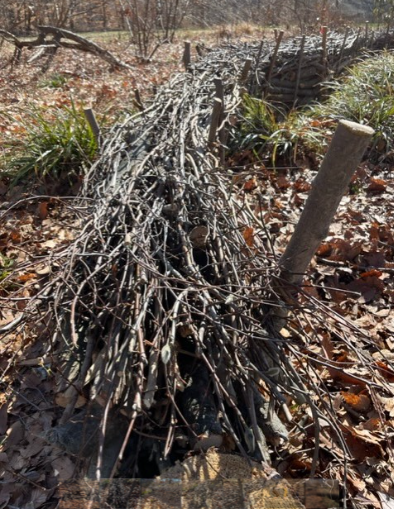
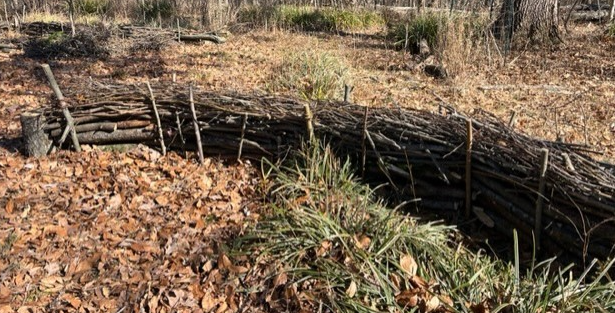
During the past few weeks in February of 2023, the first two wattles have been installed at Cylburn.  A wattle is made of sticks that are held together by stakes and interwoven with twigs and branches.  For centuries, wattle fences have been traditionally made of willow, but the wattles at Cylburn look more rustic.  They have been made from logs, branches, twigs, and leaves from trees that have been either cut down or pruned this winter at the Arboretum.

Ally Jen, a volunteer intern at Cylburn, has installed wattles on two acres of her property in the Hereford Zone, and was delighted to install wattles at the Arboretum to help with stormwater management and as a natural structure of beauty.  Ally taught Head Gardener Brent Figlestahler, Horticulture Intern Ron Roberto, Community College of Baltimore County Sustainable Horticulture students Joseph Riley and Rachel Depetris how to mark the topographical contour line using a level so that the wattles would be perpendicular to the flow of stormwater.  The wattles are constructed to decrease erosion and to help slow down the stormwater runoff so that it can recharge the groundwater.

Wattling is done best with others, for it involves many hands and many hours.  Piles of logs and branches were gathered and sorted by size.  Logs were cut and placed.  Another volunteer, Nancy Blois, helped gather branches for the wattles.  Others trimmed larger branches into smaller pieces.  Each wooden stake was whittled by hand and pounded into the ground to hold the wattles in place.  Young children can pretend to be “stick hunters,” who gather great big bags of twigs and small branches that have fallen on the ground which can then be woven into the wattles.

Wattling is quiet work.  Although it can be slow going to weave the branches and twigs tightly together, it can awaken our connection to and appreciation of the natural world, especially trees.

The first wattle spans forty-two feet and is approximately two-feet tall and a foot wide; the second wattle is roughly half the length of the first.  Each wattle is unique and beautiful.  Using the logs and branches gathered at Cylburn enables the Arboretum to reuse the woody material instead of removing it offsite.  The wattles can also provide habitat for wildlife and catch leaves that fall from the trees.

Depetris, Riley, and Roberto join Ally Jen as experienced wattlers!  On behalf of Cylburn, they invite you to see the wattles at Cylburn.
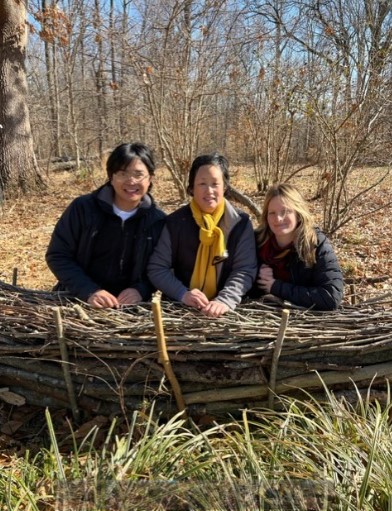
Ron Roberto, Ally Jen, and Rachel Depetris

Visit

  • Hours
  • Buildings and Facilities
  • Know Before You Go
  • The Collections
  • Cylburn Arboretum Tour Information

Events

  • Upcoming
  • Monthly Programs
  • Annual Events
  • Field Trips
  • Cylburn Nature Camp

Give

  • Ways to Give
  • Donate
  • Membership
  • Gifts of Stock
  • Donate a Tree or a Bench

Members

  • Members
  • Monthly Programs

Rentals & Permits

  • Rentals & Photography

Contact Us

  • Contact Us

Follow our social accounts

Instagram
Facebook
YouTube
Email Newsletter
How’s this for a word of the day: fascicles? Pine How’s this for a word of the day: fascicles?

Pine trees can be identified by their needles, which grow in fascicles, or bundles, usually containing 2, 3, or 5 needles. This is a key characteristic used to identify different pine species. For example, five needles in a fascicle typically indicate an Eastern white pine.

Swipe ➡️ to see several fascicles found around the property: Japanese red pine (Pinus densiflora, 2 needles), pitch pine (Pinus rigida, 3 needles), longleaf pine (Pinus palustris, 3 needles), and Eastern white pine (Pinus strobus, 5 needles).

#cylburnarboretum #baltimore #pine #pinetrees
Follow on Instagram
  • Visit
  • Programs & Events
  • Give
  • Volunteer
  • Property Partners
  • About Us
  • Members
  • Rentals & Permits
  • Contact Us

Copyright © 2025 • Cylburn Arboretum Friends • 4915 Greenspring Avenue, Baltimore, Maryland 21209 • 410-367-2217