Calendar

- This event has passed.
NEC Drop-in: Busy Bees
August’s theme, Pollinators of Cylburn, explores the diverse wildlife that help flowering plants grow and reproduce. From butterflies and bees to hummingbirds and bats, pollinators can be found throughout Cylburn Arboretum visiting flowers in search of nectar and pollen. Each Saturday highlights a different pollinator through hands-on activities and simple make-and-take crafts.
All ages are welcome. No fee or registration required (supplies limited). Drop-in anytime between 11am to 12pm.
August 1: Peculiar Pollinators
When it comes to pollinators, bees, butterflies and hummingbirds are often what we think of. Drop by the Nature Education Center to learn how beetles, wasps, flies and even ants are important pollinators!
August 8: Busy Bees
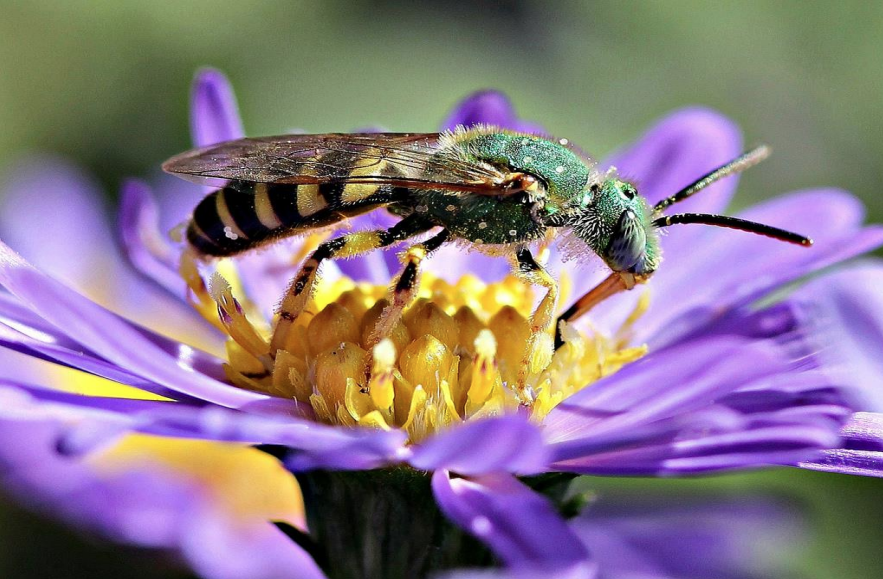
Bees come in all colors, shapes and sizes from the large carpenter bees to tiny sweat bees. Over 430 species of bees can be found in Maryland! Drop by the Nature Education Center to discover some of the species you may find here at Cylburn Arboretum.
(Image: Sweat bee visiting an aster by Patty O’Hearn Kickham CC by NC ND 2.0)
August 15: Helpful Hummingbirds
The Ruby-throated Hummingbird is the only breeding hummingbird species found in the northeast region of North America. Drop by the Nature Education Center to identify the flowers that attract these hummingbirds before they start their fall migration to Central America.
August 22: Lovely Lepidoptera
Butterflies and moths are insects that scientists call Lepidoptera, meaning, “scale winged”. Drop by the Nature Education Center to learn about the differences between butterflies and moths as well as the different senses they rely on to help them find food.
August 29: Beneficial Bats
Some bats help pollinate flowers and spread seeds while searching for nectar and fruit at night. Drop by the Nature Education Center to learn about bat species in Maryland and how they help the environment.